Noseweight explained
28 Aug 2026 · by Jérémy Vaucher
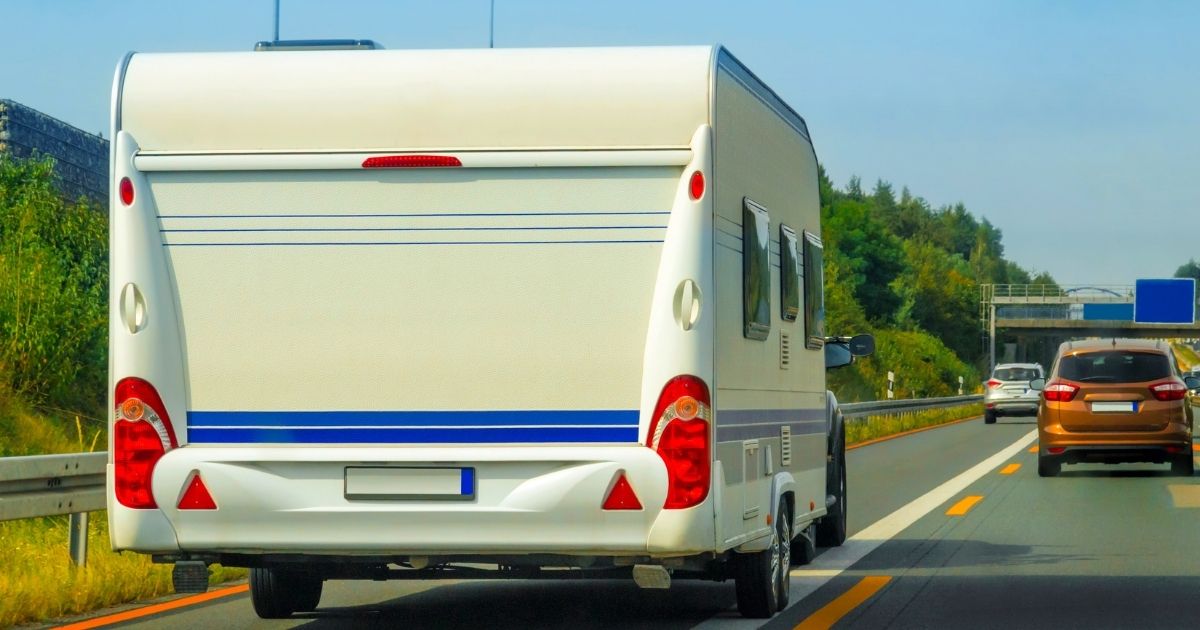
Noseweight is the downward force the trailer drawbar applies to the towball. It is a quiet number, never advertised in a brochure, and yet it largely decides whether your outfit feels planted or twitchy.
Too little and the trailer becomes unstable. Too much and the car squats on its rear axle and loses composure. Between those two extremes sits the character of the entire journey.
What it actually is
Put a scale under the drawbar of a hitched trailer, at towball height: the reading is the noseweight. It depends directly on how the trailer is loaded, and above all on where heavy items sit relative to the axle.
Loading towards the front raises it. Loading towards the rear lowers it, sometimes almost to nothing, which is the worst case of all.
Three limits at once
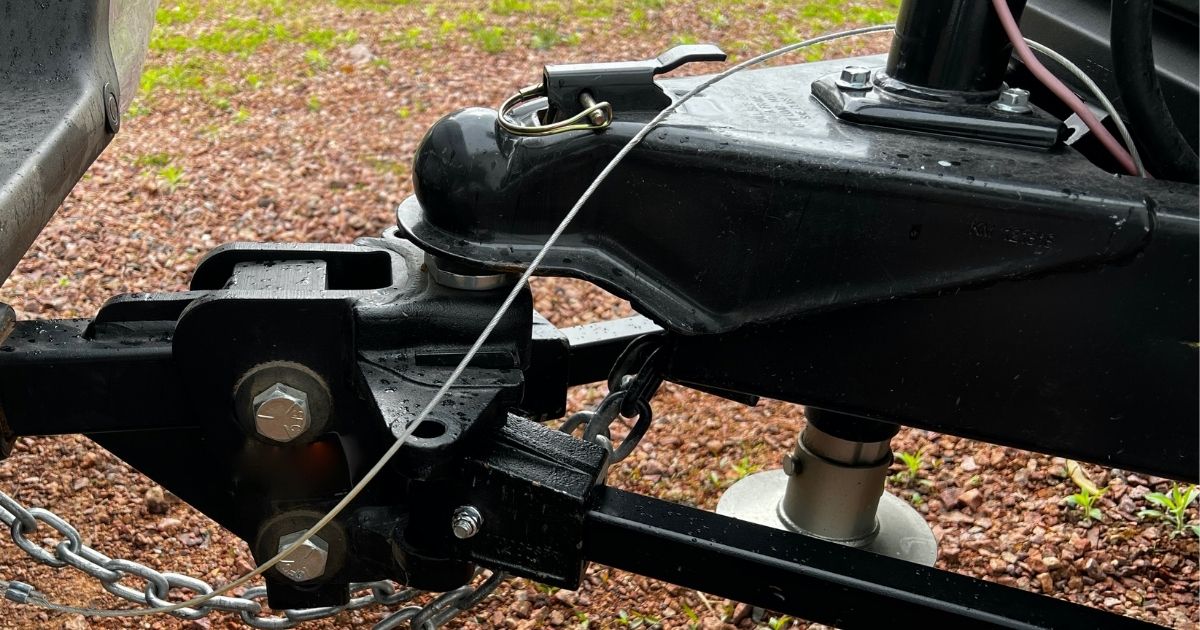
This catches people out: the permitted value does not come from a single document.
- The car sets a maximum, quoted by the manufacturer.
- The towbar has its own maximum, stamped on its plate.
- The caravan or trailer states a permitted range for its drawbar.
The figure you must not exceed is the lowest of the three. Fitting a strong new towbar to a capable car does not automatically raise the ceiling: the weakest link governs.
Why too little is dangerous
A rear heavy trailer behaves like a pendulum. At the smallest disturbance, a lorry passing or a gust of wind, it starts to swing around the ball and takes the car with it. That is snaking, and it is hard to recover once it builds.
The instinctive reaction, braking hard, usually makes it worse. Far better never to be in that state, which comes down to loading properly in the first place.
Why too much is a problem too
Conversely, an overly heavy drawbar drops the back of the car. Headlights point skywards, the steering goes light, traction changes and the rear tyres work beyond their comfort zone. Rear axle load can exceed its own limit, which is a separate offence from exceeding the gross vehicle weight.
Measuring it simply
- Load the trailer as you would to leave, on level ground.
- Unhitch and rest the drawbar on a bathroom scale at exactly towball height, using a board to spread the load if needed.
- Read the value and compare it with the three limits.
- Move heavy items to adjust, then measure again.
Dedicated noseweight gauges exist and pay for themselves quickly if you tow often. The principle stays the same: measure, correct, measure again.
The link with caravan loading
Good noseweight almost always follows from correct loading: heavy items low down, just ahead of the axle, light items at the extremities. That is exactly the method described in loading a caravan properly.
If the outfit still feels nervous despite careful loading, an anti snaking stabiliser genuinely helps, but it does not fix poor balance: it damps, it does not repair.
On the car side
A car with a tight gross vehicle weight will see its margin shrink because noseweight counts against it. So before choosing a vehicle, look at the trio of towing capacity, gross vehicle weight and kerbweight, available on every page, for instance for the Renault Austral, the Nissan Qashqai or the Toyota RAV4.
What figure to aim for
Caravan clubs generally suggest aiming for something between 5 and 7 per cent of the real trailer weight, while staying under the ceilings imposed by the car, the towbar and the drawbar. It is not a legal requirement but a well tested practice that keeps the outfit in a healthy zone.
In reality many outfits sit below that band, because heavy items end up in the most accessible locker at the rear. Correcting the load is usually enough to come back into range, without buying anything.
Watch out for one side effect: fitting a cycle carrier on the drawbar raises noseweight sharply, thanks to the leverage of the arm. Two electric bikes alone can push a correctly loaded outfit out of its permitted range.
Weight distributing hitches
On heavy outfits, a weight distributing hitch transfers part of the drawbar load back onto the front axle of the car. It levels the stance and restores steering feel when noseweight is high.
It is not a universal accessory. Some manufacturers explicitly prohibit it, particularly where the towbar or the structure is not designed to take those forces. Before fitting one, check the position of both the car manufacturer and the towbar maker. And remember that such a hitch never reduces total weight: it moves it.
The most common mistakes
- Measuring on an empty trailer, when only the departure load matters.
- Measuring on sloping ground, which distorts the reading completely.
- Resting the drawbar at a height different from the towball.
- Remembering the car limit while forgetting the towbar limit, which is often lower.
- Repacking every year without ever rechecking, even though the kit on board changes.
The habit worth building is to record, once, the layout that gives the right figure: which locker takes what, where the generator travels, where the gas bottles sit. A photo taken on the day the outfit was properly balanced beats reconstructing it from memory in August.
In short
Noseweight is the best value adjustment on the whole outfit: free, quick and decisive for stability. Measure it once, remember the layout that gives the right answer, and repeat it every time you leave. Always check the V5C logbook before towing.