How to work out your car towing capacity
9 May 2026 · by Jérémy Vaucher

You are hesitating over a listing, or the neighbours caravan has caught your eye. The real question is not engine power, it is what your car is legally allowed to pull. The good news: towing capacity takes two minutes to work out, from figures you already have on the V5C logbook and the manufacturer documentation.
This article gives you the formula, the step by step method, the classic pitfalls, a worked reasoning and a short FAQ, so you never sign without knowing again.
The formula, once and for all
Towing capacity is the lower of two values. The first is the manufacturer maximum braked towing weight: a mechanical limit tied to cooling, transmission and chassis. The second is the gross train weight minus the gross vehicle weight. You always keep the smaller of the two, never the larger.
Why two limits? Because a car may be mechanically able to pull more than the regulations allow for the whole outfit, or the other way round. The real towing capacity is therefore the more restrictive of the two ceilings. That figure, and only that, is what you compare with the loaded weight of your trailer or caravan.
The step by step method
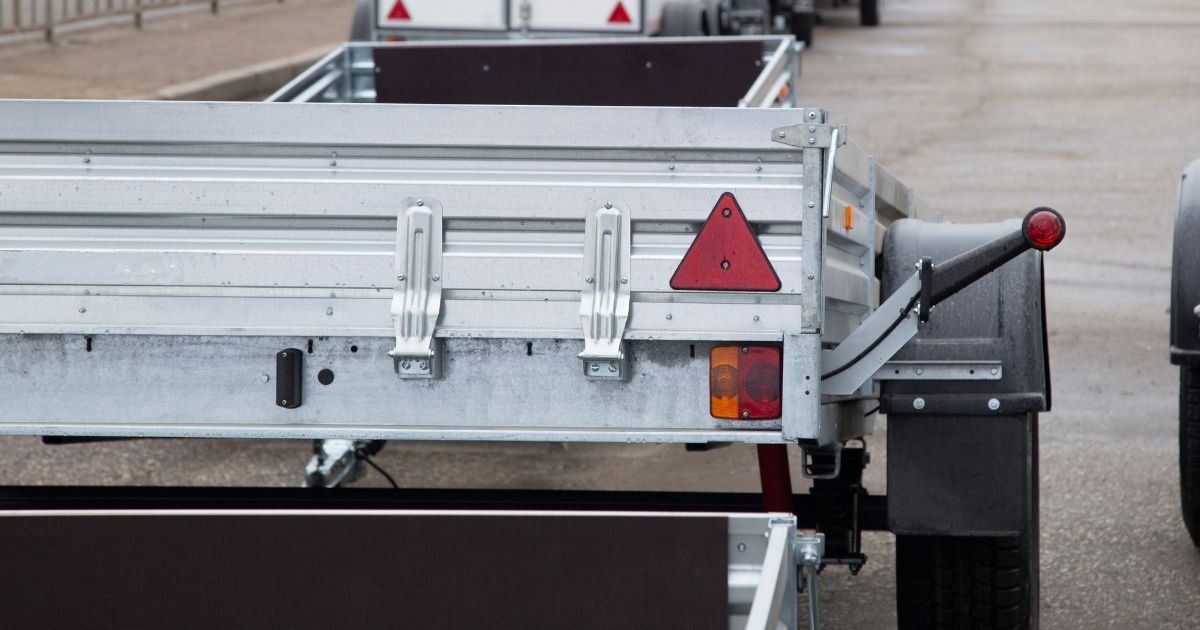
Step one, take the V5C logbook and note the gross vehicle weight and the gross train weight. Step two, find the maximum braked towing weight: it is in the vehicle handbook, sometimes on the VIN plate, and always in the official technical documentation. Step three, subtract the gross vehicle weight from the gross train weight. Step four, compare that result with the braked towing weight and keep the smaller of the two. You have your towing capacity.
No need to redo this for every model you fancy: each page on the site shows it already, engine by engine, from sourced data. You can also compare two vehicles at a glance with the comparison tool, or open a detailed page such as the Peugeot 3008 to see the breakdown by version.
Reading the V5C correctly
The V5C logbook condenses the essentials. It records the maximum technically permissible laden mass, the gross vehicle weight and the gross train weight, along with the mass in service. For the towing capacity calculation, the two figures that matter are the gross vehicle weight and the gross train weight. If the gross train weight is not stated, it often means the vehicle is not approved to tow a significant braked trailer, and you must refer to the manufacturer documentation. Reading these entries carefully avoids most mistakes.
The classic pitfalls
The first pitfall is confusing braked and unbraked towing weight: the unbraked figure, much lower, only concerns small trailers with no braking system of their own. The second pitfall is reasoning about the model in general when towing capacity changes with engine, gearbox and sometimes year. The third pitfall is forgetting the car payload: towing flat out with four passengers and a full boot can exceed the car own gross vehicle weight, regardless of the caravan.
The last pitfall, the most common, is comparing the empty caravan with the maximum towing capacity. Always compare real with real: caravan loaded weight against the towing capacity of the intended engine. Keeping a safety margin above the minimum spares you the discomfort and danger of running at the limit.
A worked reasoning
Suppose the V5C shows a gross train weight and a gross vehicle weight, and the handbook a braked towing weight. You work out gross train weight minus gross vehicle weight. If that difference is lower than the braked towing weight, it becomes your legal towing capacity. If it is the other way round, the braked towing weight is the ceiling. Either way you keep the smaller, then check it comfortably exceeds the loaded weight of what you want to tow. The values shown come from official sources, so your reasoning rests on solid ground.
Frequently asked questions
Does towing capacity depend on the gearbox? Yes, it can differ between a manual and an automatic on the same engine. Check the exact version. Can I trust a figure in a listing? No, rely on the V5C and the official documentation; a listing may quote the top of the range. What if the gross train weight is blank? Refer to the manufacturer handbook: a missing figure does not allow you to invent one. Does an unbraked trailer change the maths? Yes, the unbraked limit is much lower and applies to small trailers.
Towing capacity is not the weight of the trailer
Many people confuse towing capacity, trailer mass and the load carried. Towing capacity is the maximum the car is allowed to pull. The weight to compare is the real loaded weight of the trailer or caravan: its unladen mass plus everything you put inside. A caravan advertised as light becomes heavy once fitted with an awning, water, bikes and luggage. Comparing the towing capacity with the catalogue weight rather than the real loaded weight is the mistake that most often leads to driving overloaded without knowing it.
Braked or unbraked: do not pick the wrong figure
The manufacturer publishes two distinct towing masses. The braked figure concerns trailers with their own inertia brakes, which is the case for all caravans and medium to large trailers. The unbraked figure, much lower, applies to small trailers with no braking system. Wrongly applying the braked figure to an unbraked trailer, or the other way round, completely distorts the calculation. Always identify the type of trailer before applying the formula, otherwise the result is worthless.
Keeping a margin protects the mechanicals
Towing capacity is a regulatory and mechanical limit, but towing at the ceiling in midsummer up a mountain pass works the engine, gearbox and cooling hard. Keeping a margin below the towing capacity is not only about legality: it protects the mechanicals and keeps the drive calm. A car towing at two thirds of its capacity ages better and drives more easily than a car permanently at its limit, especially on a long loaded trip.
What next?
Once the maths is mastered, the logical next step is to settle the legal side with what licence you need to tow, then get the loading right with how to load a caravan. To start from a list of capable cars, open the 1,500 kg ranking and refine page by page.
Keep the essentials: towing capacity is the lower of the braked towing weight and gross train weight minus gross vehicle weight. Two minutes of maths save you an offence, an insurer turning against you, and above all a dangerous outfit on the road.